

Keyword news alert platform
News on key topics that staff used to search for and sort by hand is now collected automatically, with instant alerts sent by KakaoTalk and email.
How news is tracked
Before
Searched manually by staff
After
Alerted automatically as soon as it is published
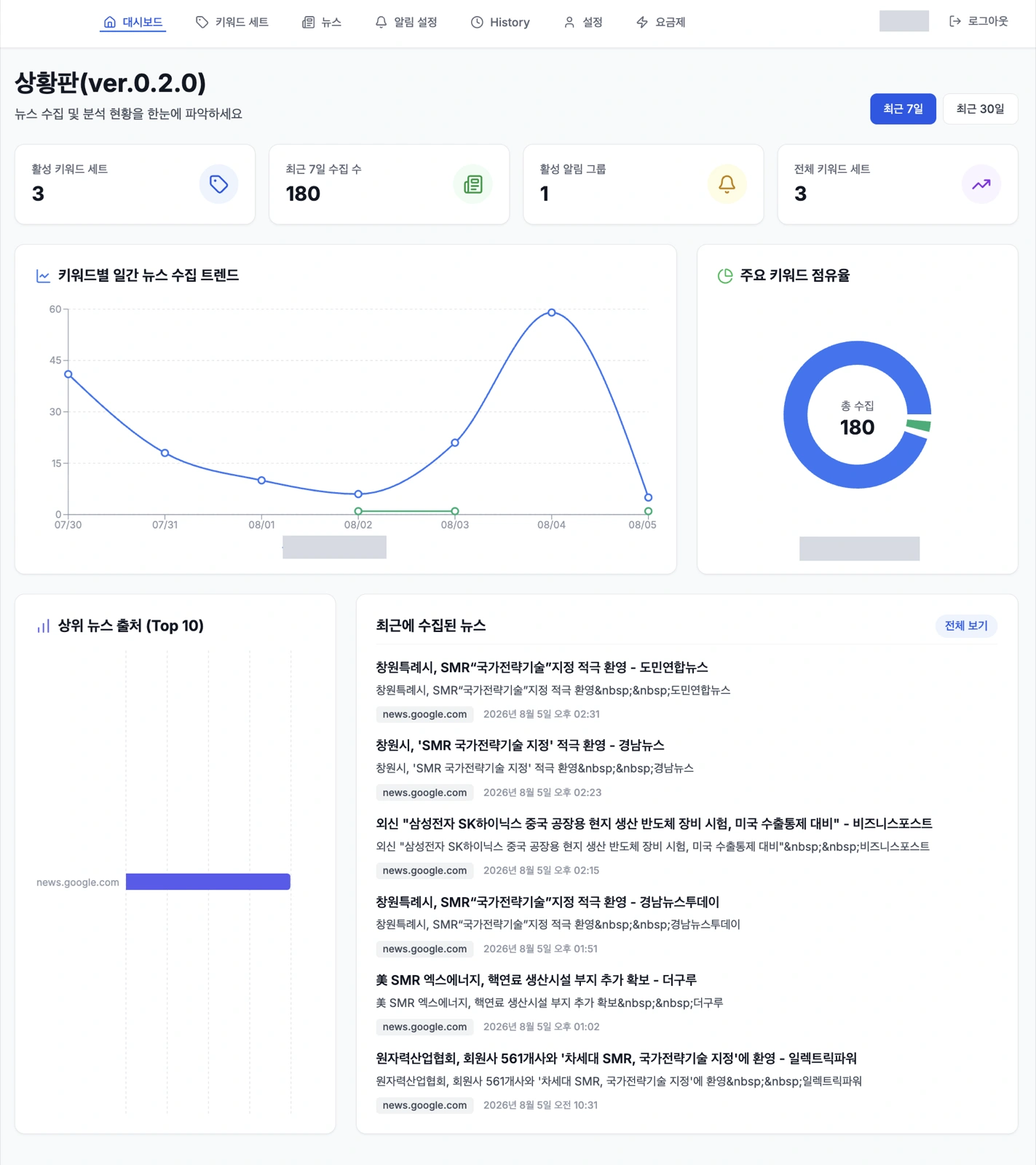
To protect client information, these screens recreate the same features with mock data.
Background
Topics tied to the institution’s work tend to surface in the news first. Staff searched every day for relevant coverage, picked out the articles and shared them internally.
What we found
The issue was not the searching itself but what was missed. Because people did the checking, it followed working hours, and anything published between checks was found the next day. By then the window to respond had sometimes passed.
The problem
Automating collection alone was not enough. If articles are only stored, someone still has to come back and check them, and the timing gap remains. The goal had to include alerting people first, without anyone going to look.
Not our first build of this kind
We had built and run a system that collects news by keyword and sends it to KakaoTalk before this project. We started out knowing what tends to break: collection that stops silently, the same article sent twice, and alerts so frequent that people start ignoring them.
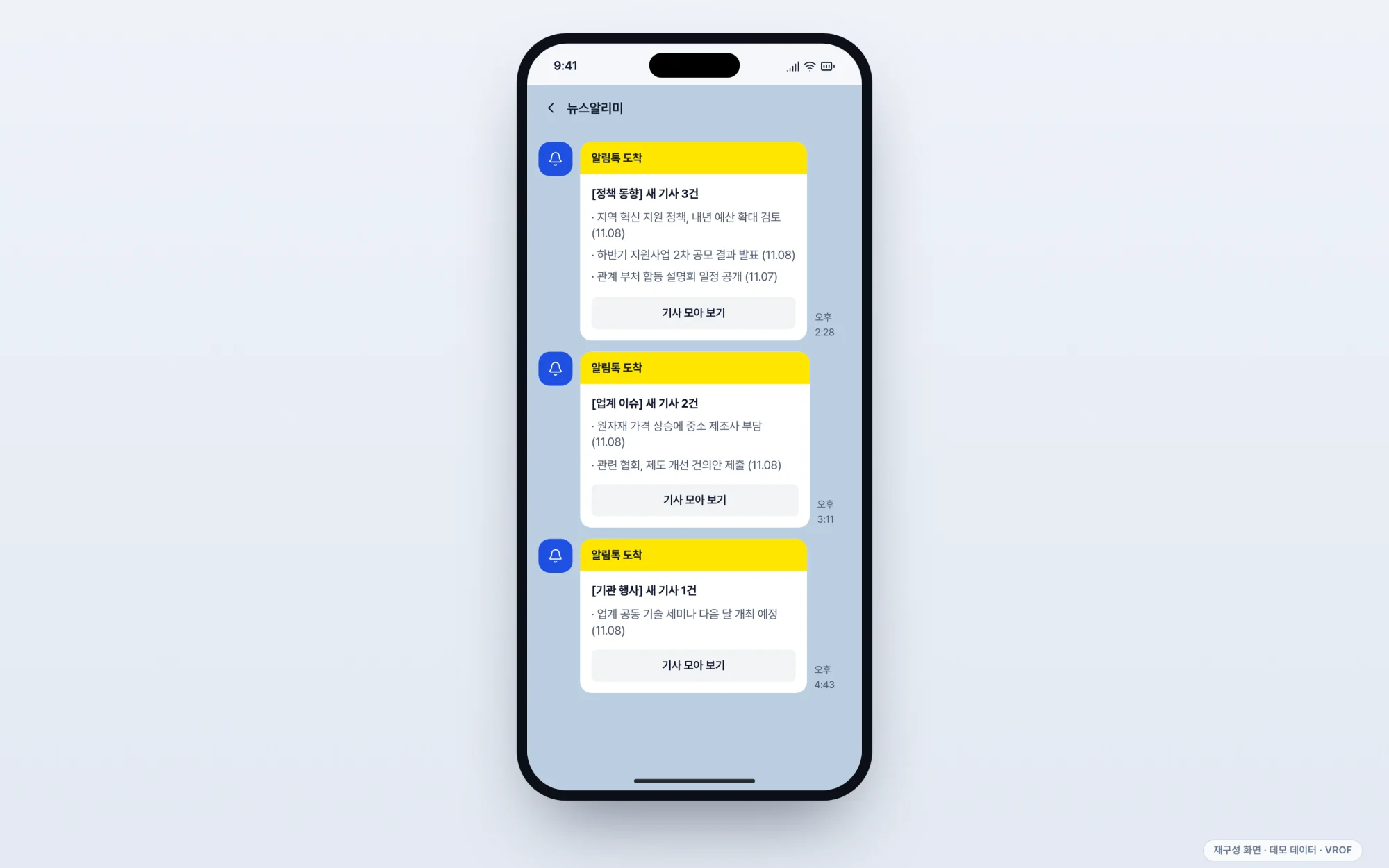
Above: the alert service we ran in 2024.
What we built
- Collection by keyword set — Register keyword groups that match the institution’s work, and coverage on those topics is collected continuously
- Real-time alerts — New articles are sent immediately by KakaoTalk and email. Alert groups make sure each article reaches only the people who need it
- Dashboard — Daily collection by keyword, keyword share, top sources and recent articles on one screen, so anyone can see at a glance that collection is running properly
Results
Delivered and accepted. Staff no longer search for news by hand, and new articles reach them by KakaoTalk and email as soon as they are picked up.
See more work built the same way under Web data collection.