A program does the transcribing you used to do by hand
When the data is scattered across many sites, someone opens each one and transcribes it into Excel. And that work starts over from the beginning the next day.
Public cases 14 · 2024–2026
The hard part is not collecting, but collecting to the end.
A single pass is not hard. The problem is what comes next. Responses cut off midway, screen structures change, and item names differ from site to site. If a broken stretch cannot be resumed, that day's collection ends up half done — yet a table alone cannot tell whether it is half or complete.
-
It doesn't rush
It spaces requests out, and after consecutive failures it stops at a set count. Stopping is better than piling up empty data.
-
It tallies by the same criteria
Item names and units differ from site to site. Adding what was collected as is means counting numbers that refer to different things. It aligns the criteria first, then tallies.
-
It records how far it got
A long collection is indistinguishable from a stuck one when no progress is visible. It leaves a marker so that even if it breaks midway, it doesn't start over from the beginning.
-
Made for the recipient to use right away
Results are delivered as Excel or on screen. The tool is handed over as an executable, so it can be used without installing Python.
What we built for you.
Each case shows the situation before it was commissioned, the result, and the actual screens.
-
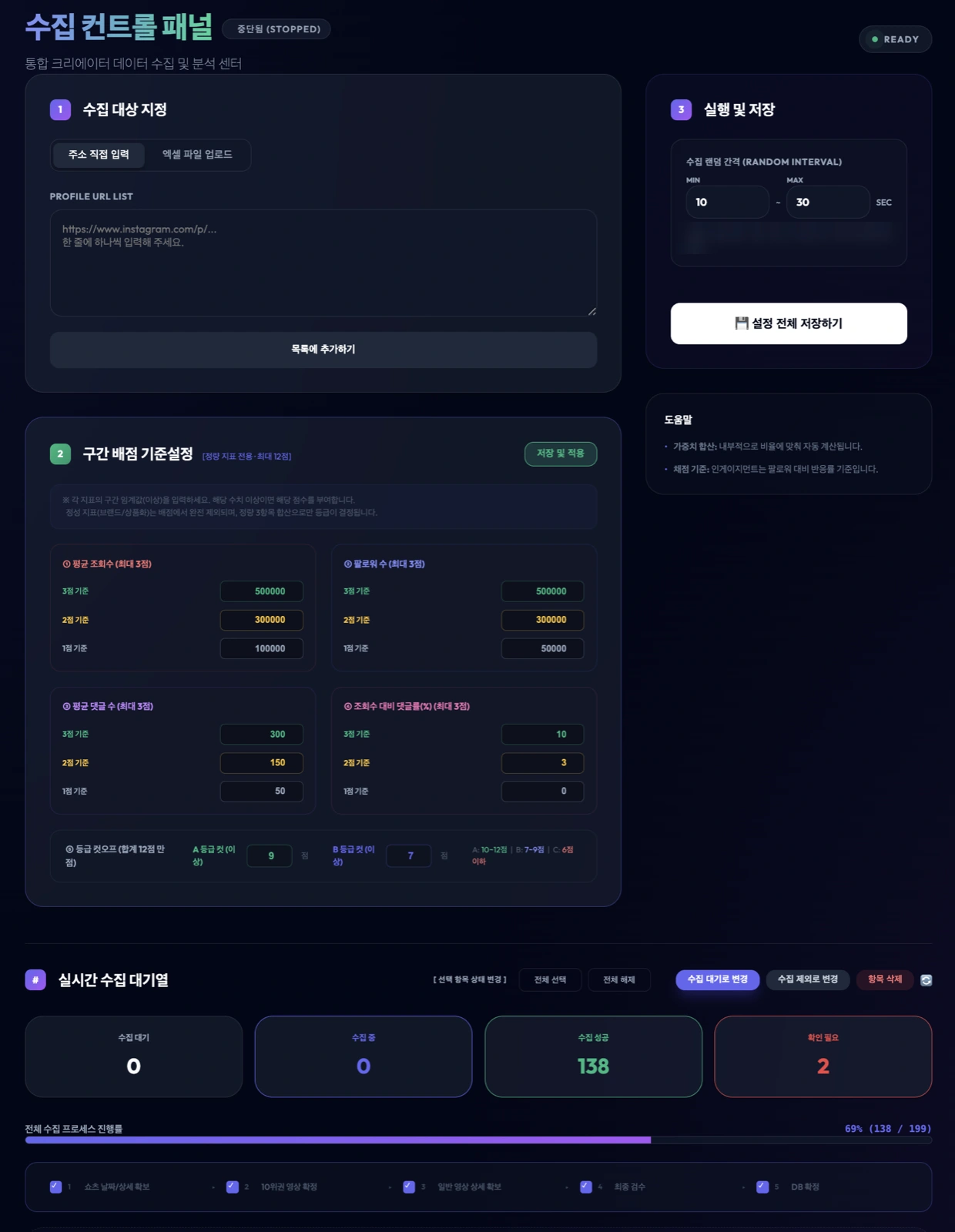
A collection and scoring system that stops you from picking creators by eye
Influencer profiles are collected automatically, scored with quantitative metrics alone, and divided into grades. The criteria judge — not the picker's gut feel.
Creator screening Metrics compared by a person from 4 quantitative items summed · grade computed to
-
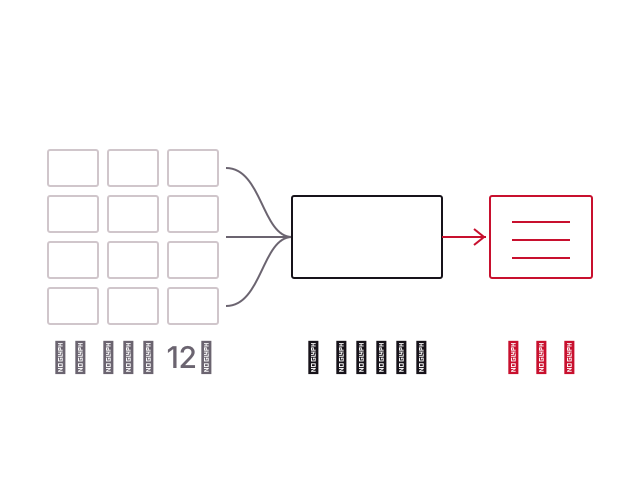
We receive it differently on each platform, and the result comes out as one table
At the request of a global research firm, we collected product reviews from twelve locations — major retail platforms across North America and Latin America, and home appliance brands' own online stores. Each platform delivered data in its own way, so instead of taking on all of them with one collector, we received each one differently and merged it all into a table in the same format.
Review data secured Separately, in a different way per platform from Twelve locations as one table in a single format to
-
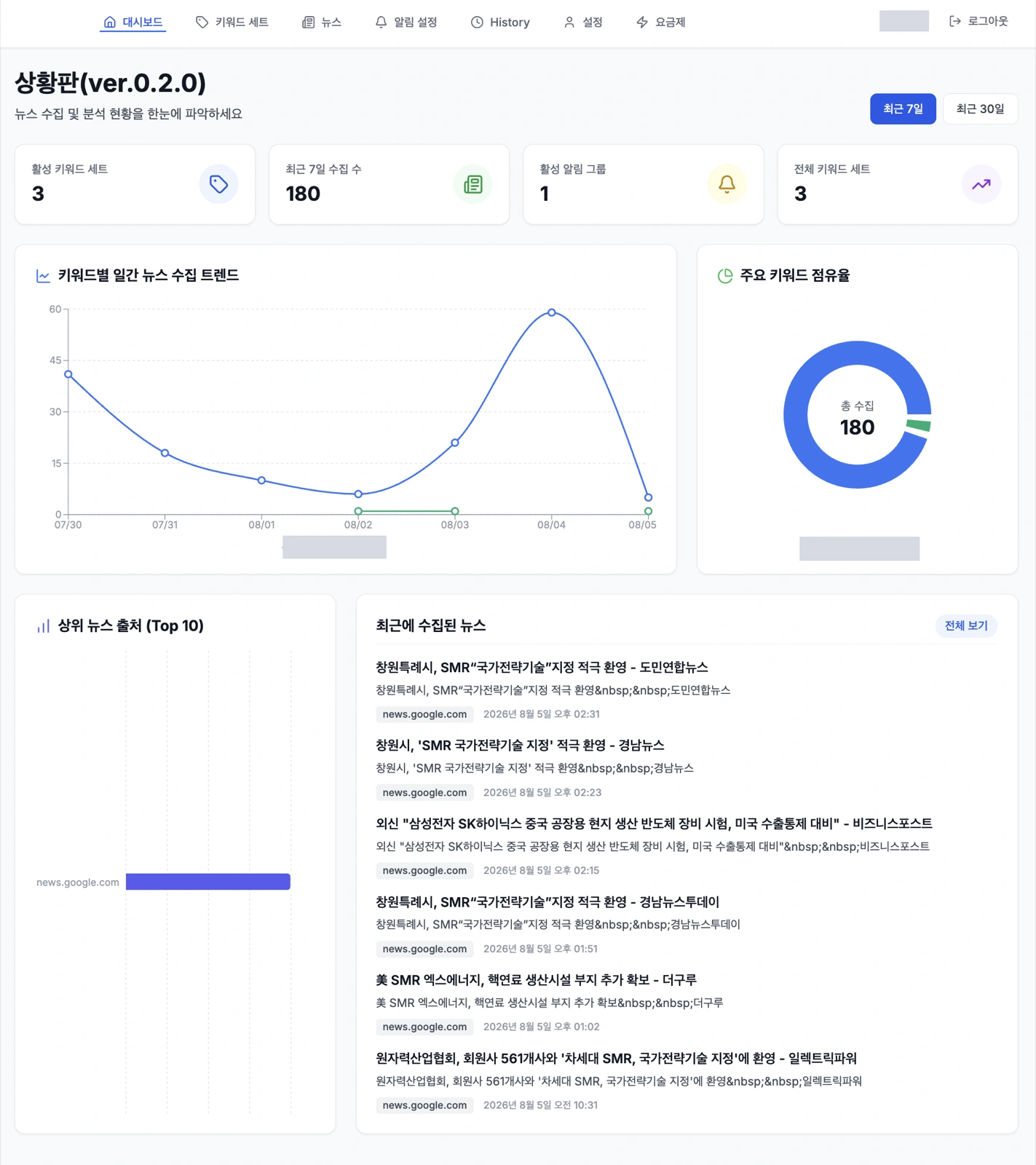
A news alert platform that replaced the daily manual news search
We built a platform that automatically gathers keyword news that used to be searched and picked out by hand, and notifies the person in charge immediately via KakaoTalk and email.
How news is checked Manually searched by the person in charge from Automatic alert the moment it happens to
-
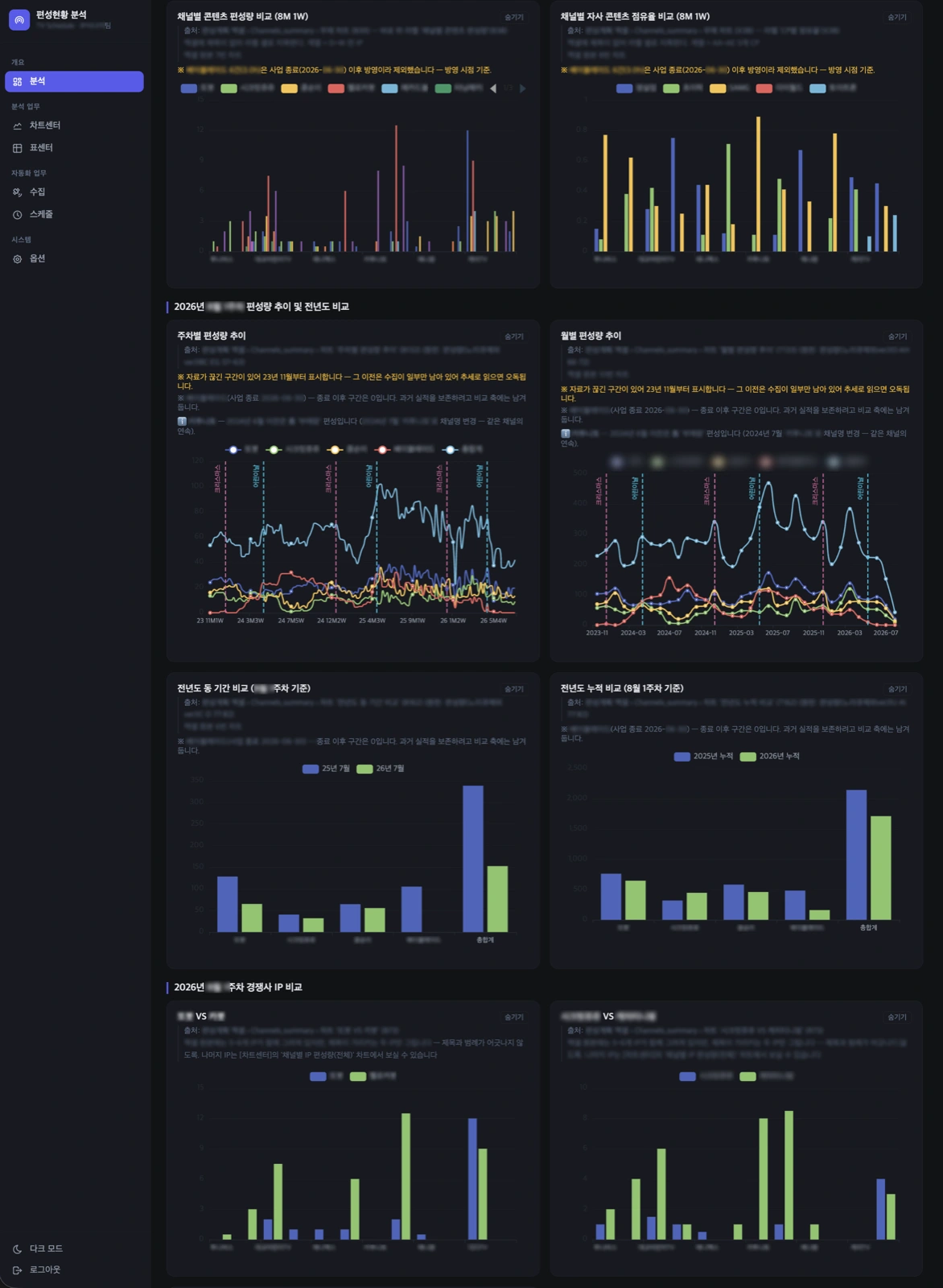
Even when the schedule changes, we don't rebuild the charts
Replaced the work of hand-collecting schedule tables and building charts in Excel with a structure that collects them automatically and shows them directly on a screen. The work that used to be redone from scratch every time the schedule changed went from 4 hours or more to within 1 minute.
Manual working time 4 hours or more from Within 1 minute to
-
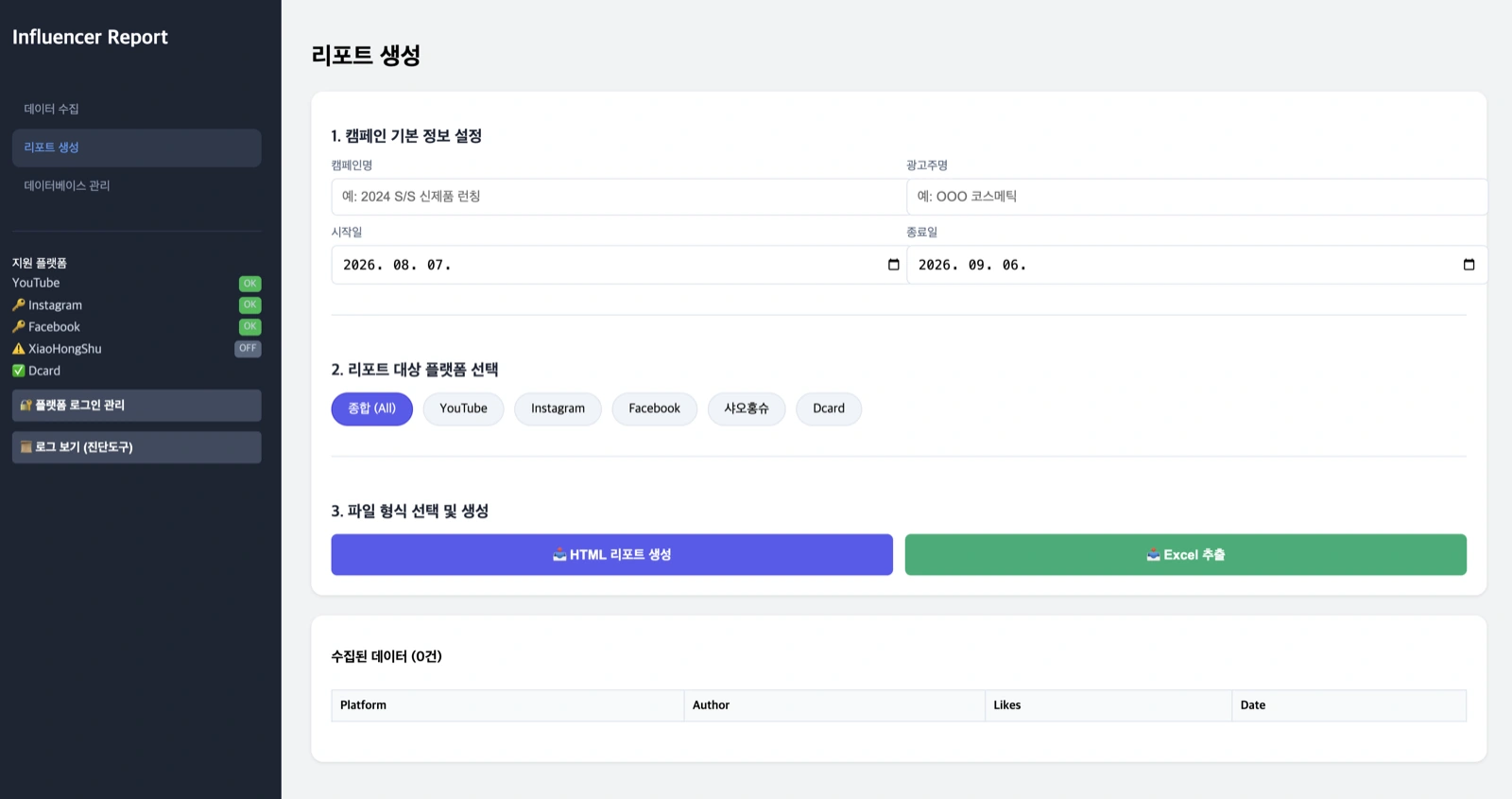
Influencer performance scattered across 5 platforms, condensed into one advertiser report
A Python desktop app another vendor started and stopped was rebuilt as a Chrome extension that runs inside the browser where the user is already logged in. All five platforms, where no values had been captured, opened up.
Platforms collecting correctly 1 of 5 from 5 platforms to
-
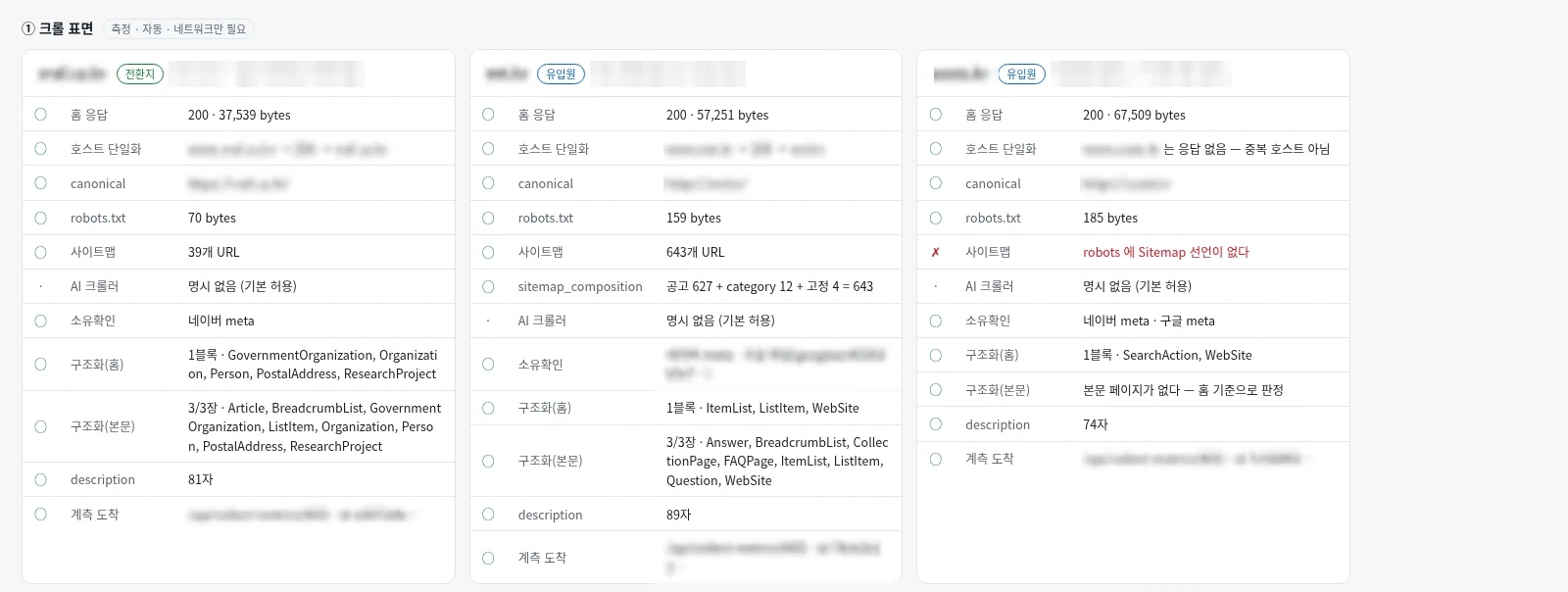
Checks eight sites three times a day to see whether search engines can read them
Checks up to twelve items per site and reports only the results that changed from yesterday. Cut required-item failures from 24 to 16, and the remaining 16 are tallied by a tool, not a person.
Readable by search engines — unmet items 24 items (2026-08-12) from 16 items (2026-08-23) to
-
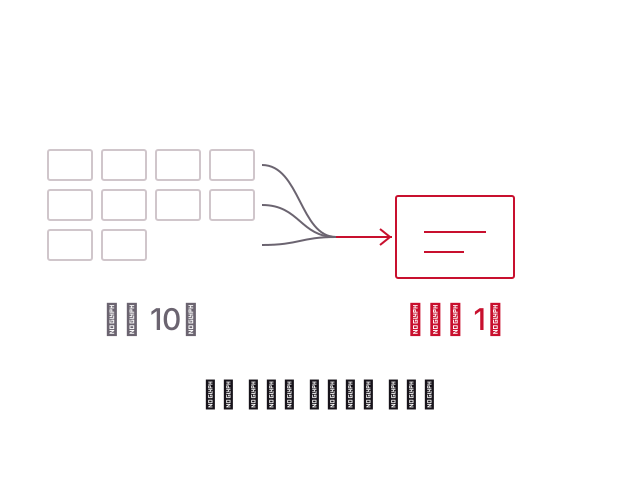
Collecting the sellers of products sold under a brand name without permission
To support a public cultural foundation's copyright and trademark protection work, we automatically collected the sellers of products sold in online shopping malls under the foundation's brand name. It counts by seller, not by product.
Sellers identified Checking search results one by one from Automatic collection across all pages to
-
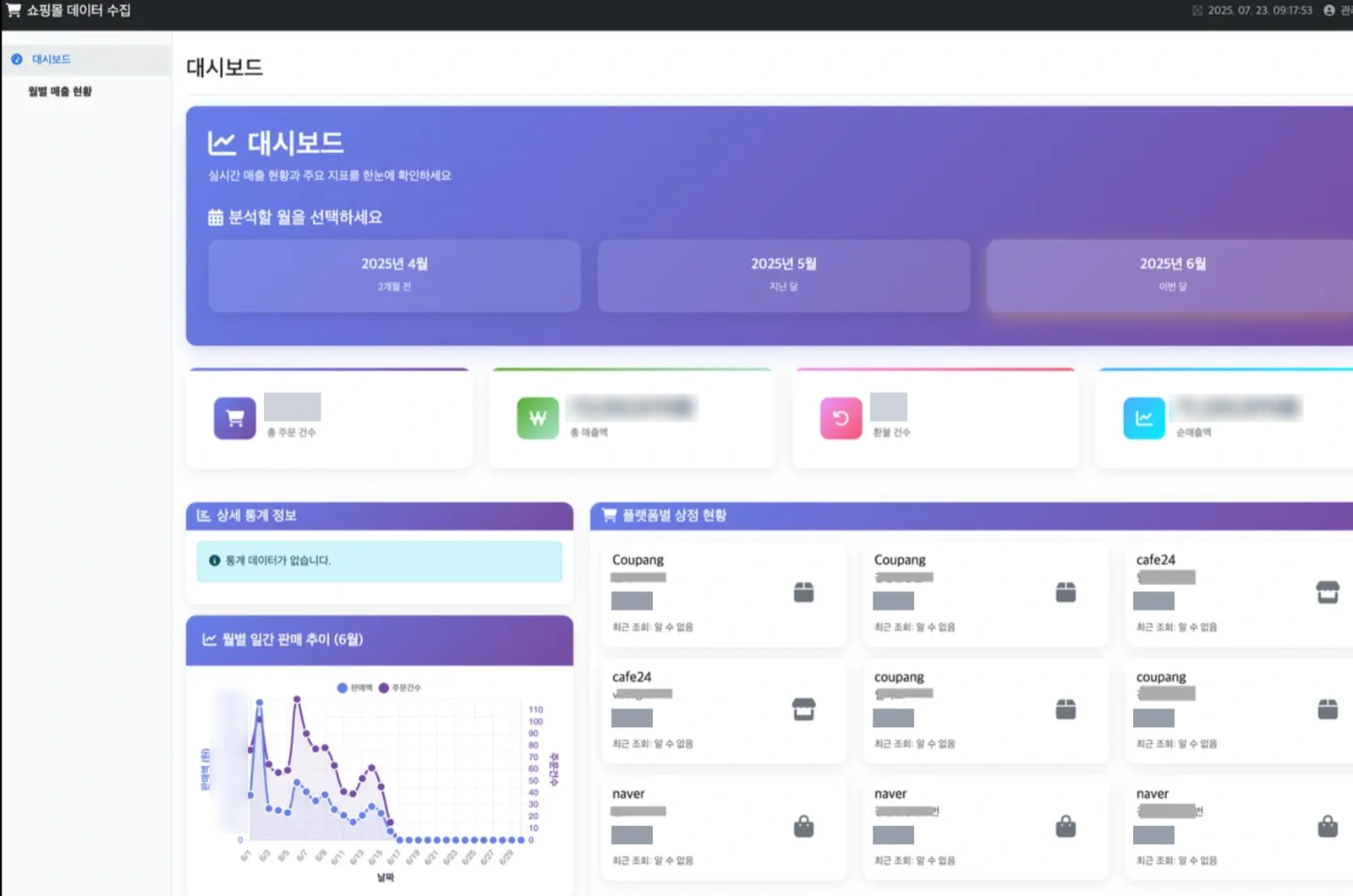
Sales status scattered across Coupang, Naver, and Cafe24 in a single screen
Order data that used to be fetched by logging into each store was automatically collected across three platforms, aggregated on a common standard, and gathered into a single screen.
Sales status check 3 platforms · separately per store from single screen · automatic collection to
-
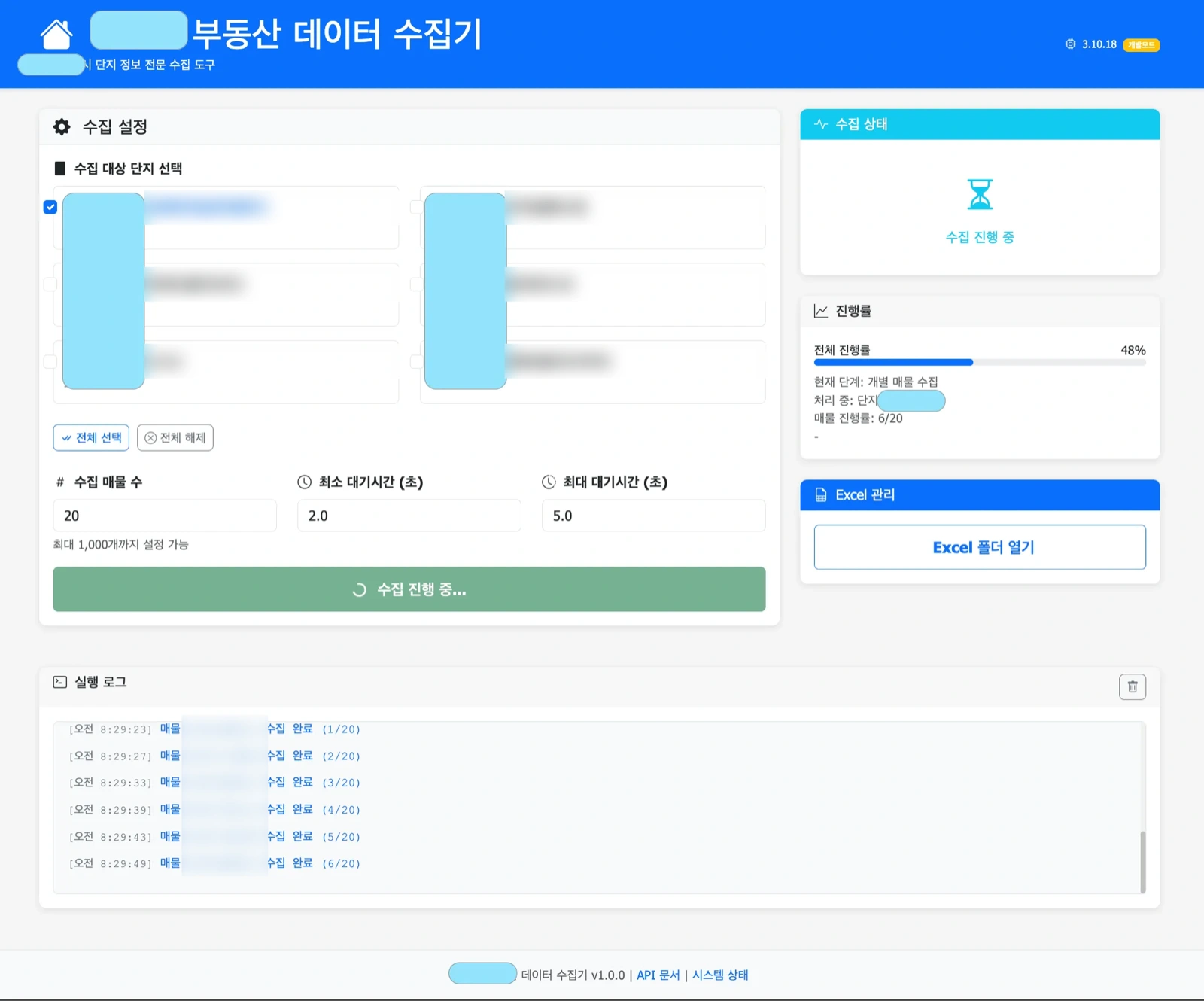
A collection program that compiles listing details into Excel when you pick a complex
The work of opening each listing and copying it down by hand now runs by selecting a complex of interest and pressing start: listing details are collected automatically and land in two kinds of Excel. It runs as a single executable — no Python installation needed.
Checking listing details for a complex Opening a screen to check each listing from Select a complex and run once · compiled in Excel to
-
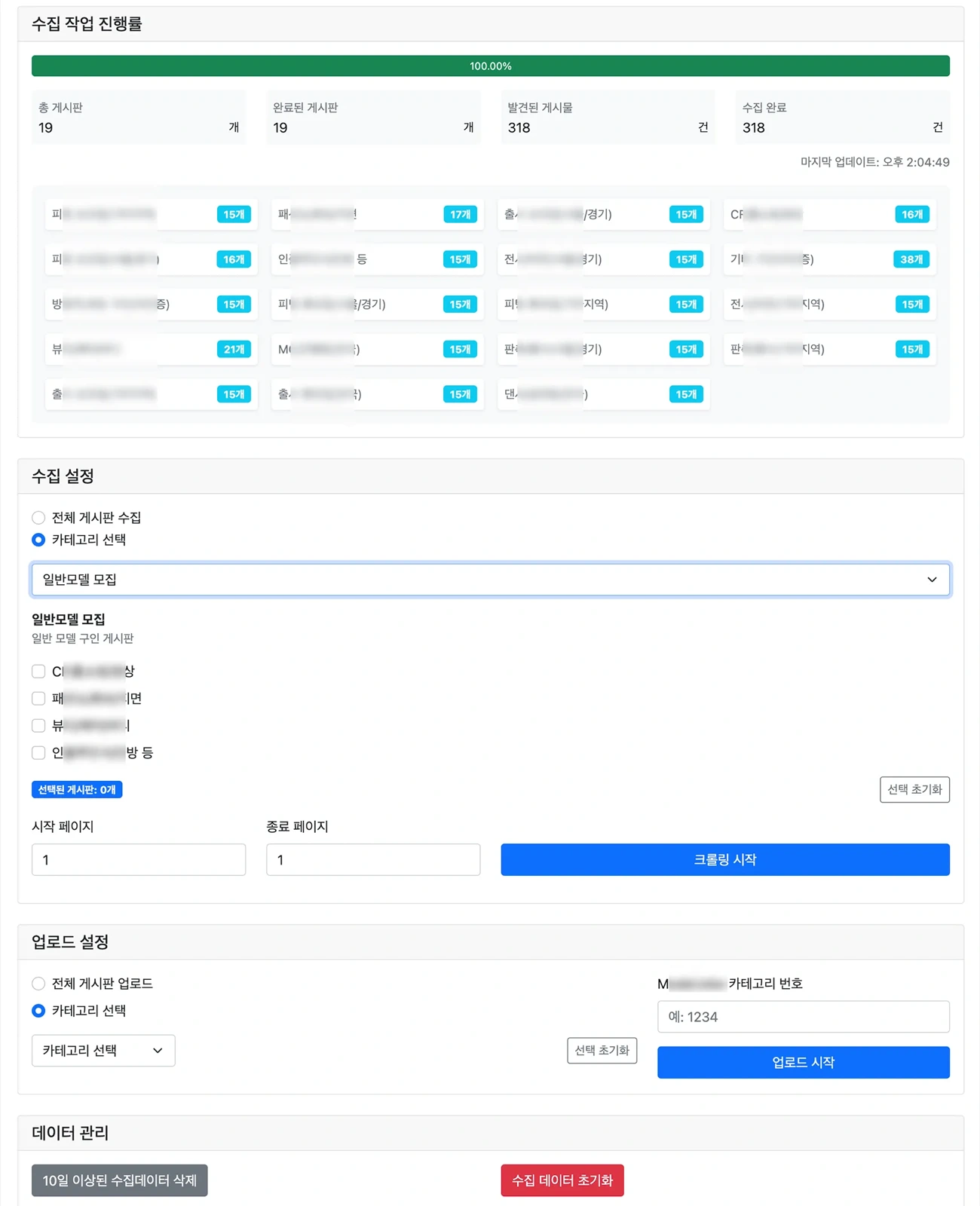
A tool that scans 19 boards, gathers postings, and posts them where they belong
Automatically gathers job postings scattered across multiple boards and posts them to the company's own site under designated categories. The screen keeps a record of how many postings came from each board.
Posting aggregation Checking 19 boards by hand from All 318 discovered postings collected to
-
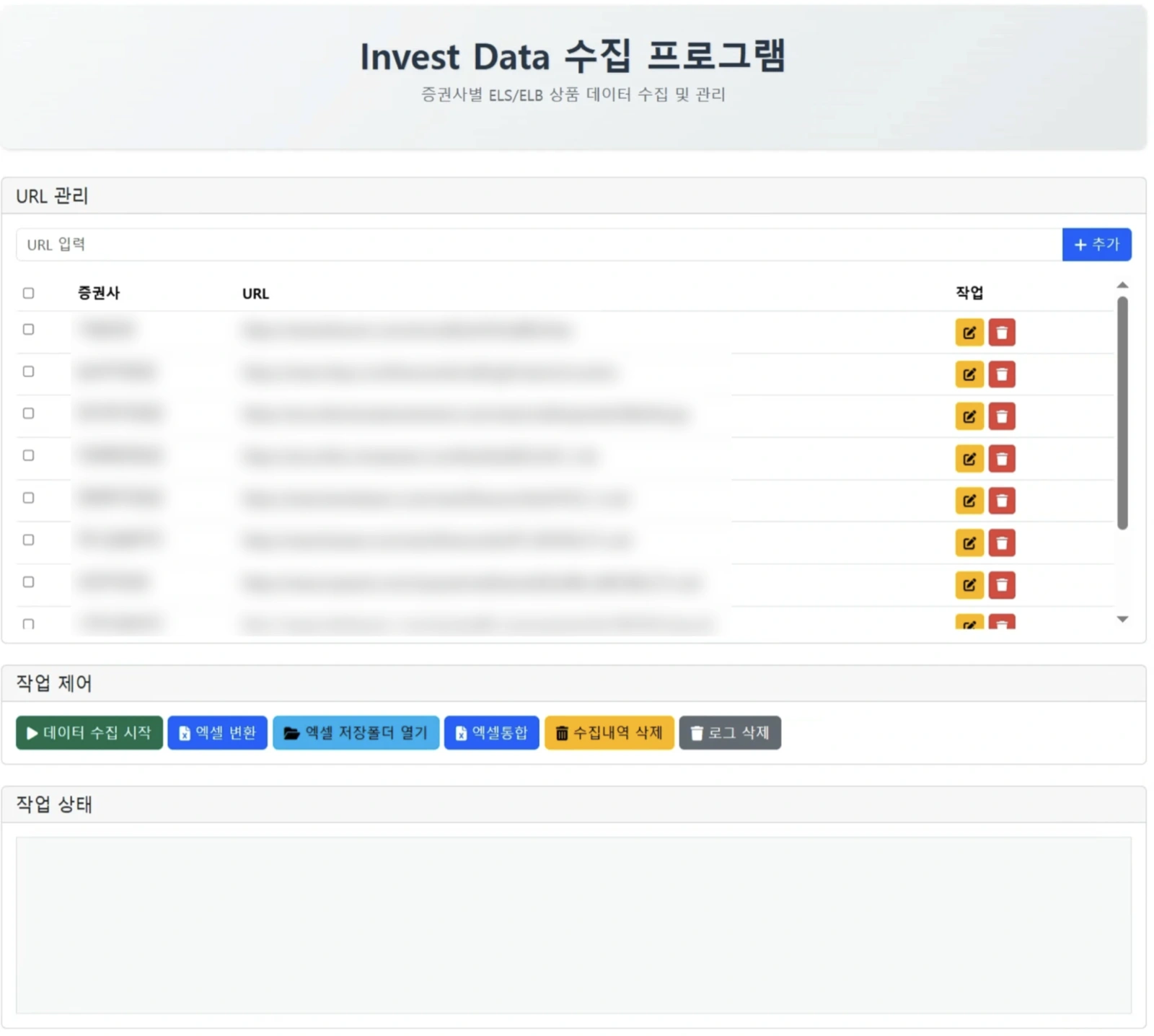
Derivatives-linked securities disclosures scattered across securities firms, as one comparable table
Automatically gathers ELS·ELB product information from each securities firm, splits product structures written in sentences into columns for maturity, period, and early redemption conditions, and puts them in one table.
Product comparison Checked separately per securities firm from Compared by condition in one table to
-
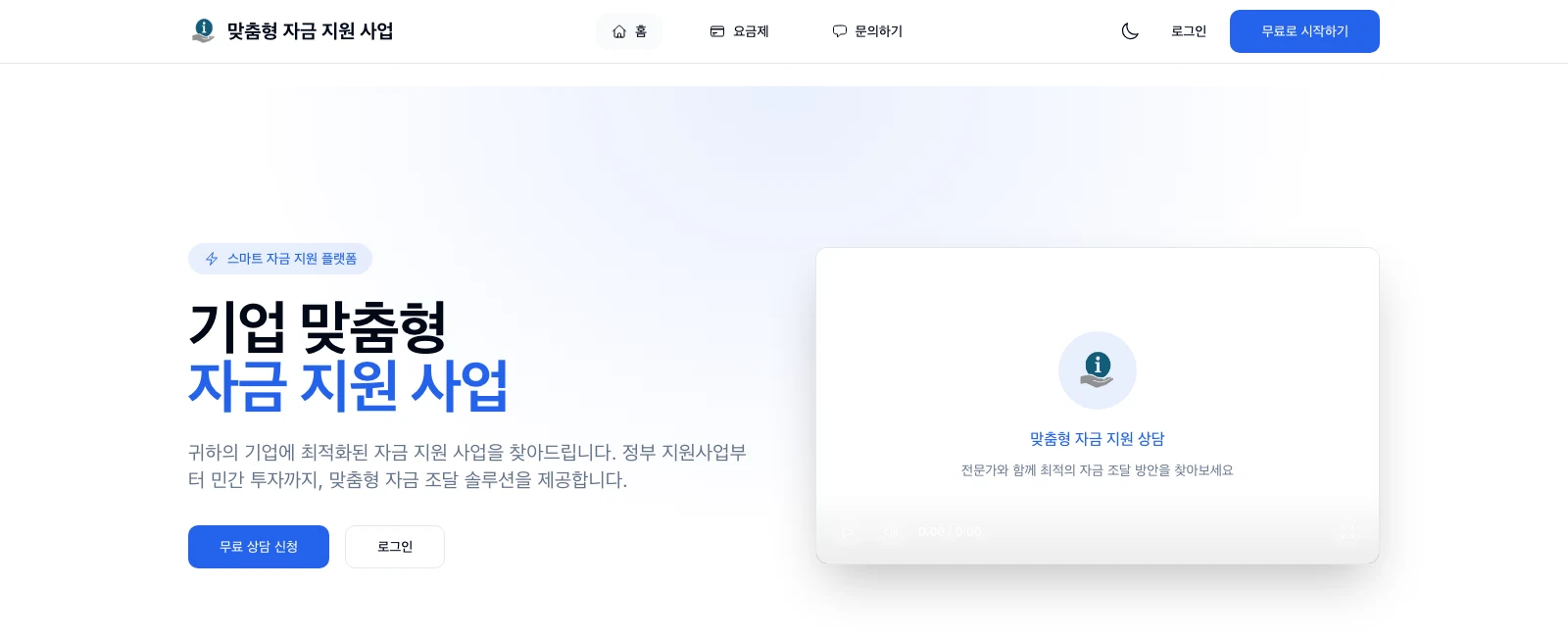
Government support program notices collected three times a day and delivered by keyword
Automatically gathers notices from four scattered public institutions and alerts only those matching registered keywords. Built to keep you from finding out about a notice after its deadline has passed.
Support program notice checking Manually visiting institution sites one by one from Auto-collected three times a day · notified on keyword match to
-
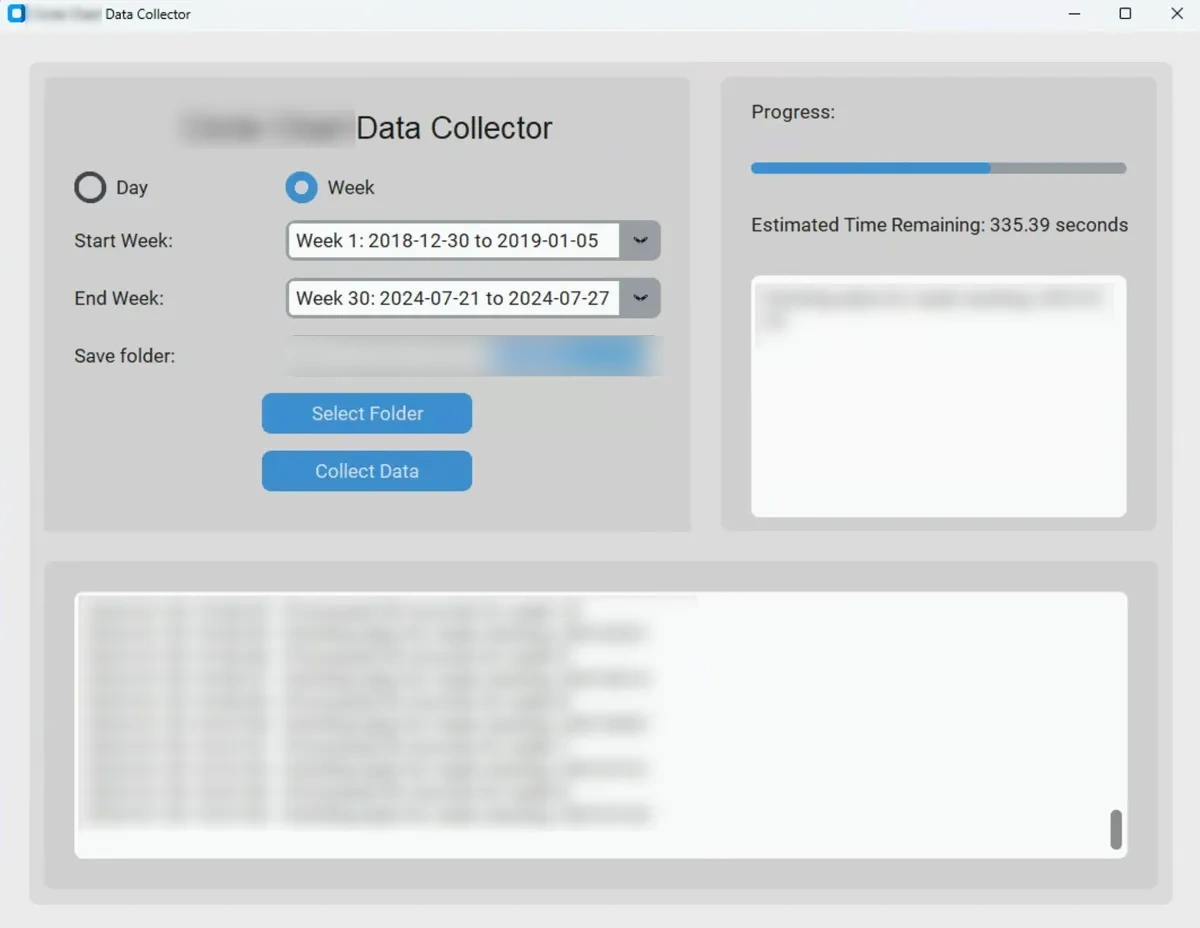
When collection breaks off midway, it never has to start over from the beginning
Records kept weekly since 2019 had to be fetched in one pass, five years' worth at once. Sending requests in a burst makes responses break off midway and that day's collection ends up half-finished, but it resumes from where it broke off and fills the entire range.
Collection range Stops midway from Full range, 2019–2024 to
-
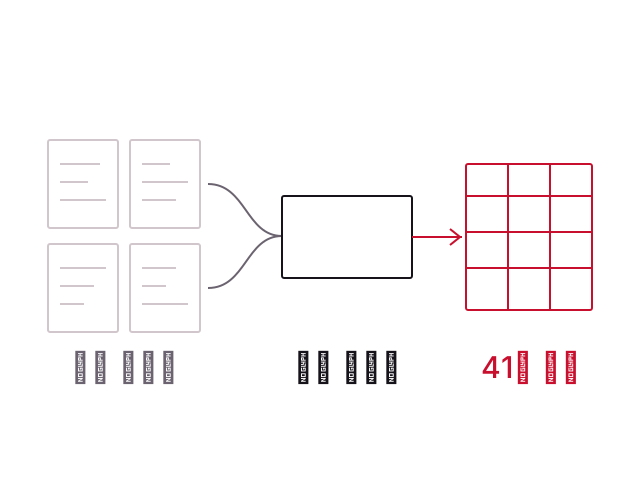
19,889 investment projects on the Indian government portal, as one table of 41 fields
Gathered every investment project from the government portal where investment projects across India are listed, and rearranged the scattered detail into one table of 41 fields. Handed over as a runnable file the person in charge can use.
Projects collected Checked per project from 19,889 projects · 41 fields to
Frequently asked about this topic
- Web crawling: how far does it go — the 4 criteria for collecting data legally The short answer: crawling can be done legally. The criterion is whether the service provider has restricted access.
- News monitoring automation — get articles that mention your company as soon as they appear The short answer: collecting keyword news automatically and getting notified is very much doable. Three things to choose, four things to decide.
- Transcribing into Excel can be automated — 3 criteria to tell The short answer: anything that follows fixed rules and repeats is a candidate for automation. What looks special is usually just rules that haven't been written down yet.
What we don't do.
The target site's terms of use and privacy protection come first. What to collect and how far is agreed first with the person who commissioned the work. Even in the cases on this page, anything that could identify a client or an individual has been masked, and each screen description notes what was hidden.
Sometimes the data you need exists only inside an app, not on the web. In that case, App crawling is the place.
No inquiries required just to see the numbers. We clearly state our collection scope and baseline rates so you can immediately use them for internal approval and budgeting.
-
Basic
KRW 150,000
A one-time data extraction from a single page that requires no login, delivered as a cleaned and structured file.
-
Simple
KRW 290,000
Everything in Basic, plus data collection across multiple pages and pagination in environments without login requirements.
-
Standard
KRW 490,000
Everything in Simple, plus data extraction from login-required pages and data integration/cleansing for up to 2 sources.
-
Recurring
KRW 990,000
Everything in Standard, plus an automated execution pipeline running at set intervals with an anomaly notification system.
The rates above are standard baselines based on difficulty, and sites with simple structures may be priced lower than the base amount. There is no need to figure out which tier applies—just leave the website URL, and we will determine the right tier for you within 1 business day.
Applies only to recurring setups: an operational maintenance fee of KRW 30,000–50,000 per month (excl. VAT) applies. This covers automated runtime maintenance and daily execution monitoring.
A 10% discount applies to simultaneous orders of 3 or more sites. The scope of work is clearly specified upon contract, and modifications due to site structure changes or post-warranty support are billed at KRW 50,000/hour (historically, maintenance cases have rarely exceeded KRW 50,000).
All we need is the list of sites to collect.
Tell us which sites and which items you need, and we'll first work out whether it is possible and what form you'll receive it in.
Replies within 1 business day